BTCV : CVNI : All about wildflowers : Red Campion

Red Campion - Silene dioica

Irish name - Corcach-Coille
Pink family - Caryophyllaceae

Red Campion flowers

Red Campion is widespread throughout Northern Ireland. It thrives best in light shade, but can survive in deeper shade in a non-flowering form. It favours a wide variety of habitats including woodland, roadside verges, hedgerows and rocky ground.

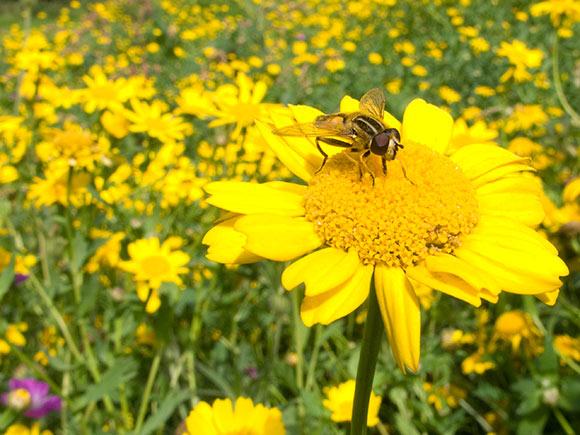
Red Campion occurs as either a biennial or a short-lived perennial herb with a creeping rootstock and upright flowering stems. The first flowers appear in May. They are pollinated by long-tonged bumblebees and hoverflies. The usually deep pink flowers are present until July and the seeds ripen between June and August. It often produces second crop in autumn. The flowers comprise of five deeply lobed petals with stalk-like base and which have an inner ring of white flaps. Red Campion often cross-pollinates with White Campion (Silene latifolia subsp. alba), an introduced plant, and produces fully fertile hybrids. The resulting cross bears pink flowers. Through backcrossing all shades of colour from red through pink to pure white can be found.

When the plant has ceased flowering, the seed capsules become apparent. The capsules open at the top, allowing the numerous small black seeds to escape. The leaves are hairy and borne in opposite pairs. The leaves at the base of the plants have long winged stalks, whereas the upper leaves have short stalks and are more oblong in shape.

Red Campion is sometimes, rather confusingly, known as the ‘cuckoo-flower’, not to be mistaken with ‘cuckooflower’, or Cardamine pratensis. The first part of its scientific name, Silene, refers to Silenus, the drunken, merry god of the woodlands in Greek mythology. The second part of its scientific name, dioica, means ‘two houses’, and refers to the fact that each Red Campion plant has either all male or all female flowers. The root has also been used as a soap substitute for washing clothes, obtained by simmering the root in hot water.

Propagation

Red campion is easy to grow, will self-seed well and succeeds in any position that is not hot and dry. It is perfect for naturalising in partially shady areas of a moist wildflower meadow or woodland.

From seed

Sow seed early in spring. When the seedlings are large enough to handle, prick them out into individual pots and plant them out in the summer. If you have sufficient seed, it can be sown outdoors in situ during the spring.

By division

Divide in spring. Plant out larger divisions immediately into their permanent positions. Pot up the smaller divisions and grow them on in a lightly shaded position, planting them out once they are well established in the summer.

The following grow in similar habitats (alphabetical by common name)

Permission from the landowner - and, if the site holds any kind of designation, from Environment & Heritage Service too - must be sought before collecting plant material (including seeds).

 
© Copyright 2004 - 2008 BTCV *Small print* XHTML CSS
BTCV is registered in England as a limited company (976410) and as a charity in England (261009) and Scotland (SCO39303)