Knapweed - Centaurea nigra
Irish name - Cnapán Dubh
Daisy family - Asteraceae (formally Compositae)
Knapweed is also known as Black or Lesser Knapweed. The word ‘knap’ means ‘knob’ – ‘knobweed’. The scientific name probably derives from Greek mythology in which the centaur (half man-half horse) Chiron was said to have used the plant for its healing powers. The purple-magenta flowers project, thistle-like, from a flower head that resembles a small bristly pineapple and gives the plant its alternative name of Hardhead. The plants where once used as a poultice on wounds and has been also used in traditional fabric dyeing. Despite its purple flower, yellow is the most typical colour of dye that it produces.
Knapweed is a perennial herb that reproduces by seeds and by regrowing each year from a woody root crown. It has dull green leaves, which are entirely covered with small, rough hairs. The leaves are very variable. In a mature plant, the lower leaves are lobed, whilst the upper ones are narrow and generally without lobes. The Knapweed produces flowers from June to September. The solitary seedheads occur at the ends of the upper branches.
This plant prefers soils of low to moderate fertility and is found in a variety of habitats including pastures, meadows, rock outcrops, waste land, river banks, road verges and particularly in ungrazed limestone grassland. Is found on moist and dry grassland, very sandy soil and very acidic soil. However, it does not do well in dense woodlands and in waterlogged conditions. Knapweed grows wherever the grass sward is not too closely cropped. It is ideal for grassland sites with minimal management.
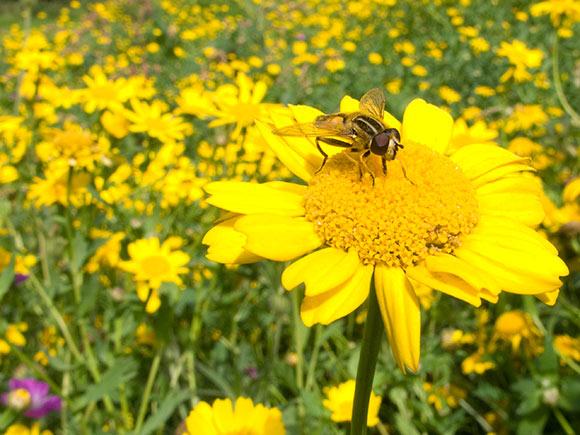
In a formal setting, Knapweed also makes an attractive addition to a garden border, providing late summer nectar for many species. The flowers are self-fertile and are pollinated by bees, flies, moths and butterflies. The plant is an attractive nectar source for butterflies such as Tortoiseshell, Painted Lady, Satyr Pug, Silver Y and Lime-speck Pug. Furthermore seeds ripen from August to October and if the flowers are left uncut, the seeds, which form in the dead flowerheads, provide a winter food source for birds.
Propagation
From seed
Knapweed produces about 60 seeds per head. They are ivory with lengthwise stripes, and have a pale, short pappus. Sow in October or April in a cold frame. When they are large enough to handle, the seedlings are pricked out into individual pots and planted out into their permanent positions in the summer.
By division
Divide large plants in autumn. Larger clumps can be replanted directly into their permanent positions, though it is best to pot up smaller clumps and grow them on in a cold frame until they are well rooted. As well as dividing plants, basal cuttings can be taken in spring. Harvest the shoots when they are about 10 – 15cm long with plenty of underground stem. They can be potted up into individual pots and kept in light shade in a cold frame or greenhouse until they are well rooted. They can be planted out in summer or late in the spring. This should be done at least once every three years in order to maintain the vigour of the plant.
The following grow in similar habitats (alphabetical by common name)
- Bladder Campion
- Common Dog Violet
- Cuckooflower
- Devil's-bit Scabious
- Field Scabious
- Goat's-beard
- Harebell
- Lady's Bedstraw
- Ox-eye Daisy
- Primrose
- Self-heal
- Teasel
- Yarrow
Permission from the landowner - and, if the site holds any kind of designation, from Northern Ireland Environment Agency too - must be sought before collecting plant material (including seeds).