Seed may, be collected as soon as it ripens on the tree or shrub, or you may wait for it to fall – much easier than trying to reach acorns high on a mature oak tree!
In general, seeds turn colour as they ripen and are easier to pick, so you can tell when they are ready. Guidance is given for each species in the individual notes. Some trees always bear more seed than others of the same species, and many vary, in yield in different years.
You may choose seed from a healthy looking specimen which is well grown, but some mis-shapen trees are the result of poor soil or excess wind rather than any genetic weakness. Certainly avoid trees which look diseased, for example with canker (lumps on trunk or branches). Try to take seed from as many specimens as possible so as to achieve maximum genetic diversity.
Seed must be fertile if it is to germinate successfully, so it is best to collect seed where there is a group of trees, when cross-pollination and fertilisation are likely. A solitary tree may be too far away from others of its own kind.
If you know where the final trees will be planted, try to take seed from that area. Not only will the genetic match be good, but these are also likely to grow more successfully – after all, they have adapted to grow in those conditions.
If you intend to plant beside a nature reserve or site of scientific interest, the best plan is to ask permission to collect seed within the scheduled area and then grow on trees from that local stock. That way you can be sure of planting the right trees.
You will need a container when you first collect the seed. Hessian or open mesh bags are good or open baskets for large seeds like acorns. If seeds cannot breathe they may become damp and overheated which reduces chances of successful germination, and the seeds may, even go mouldy.
In general, avoid polythene or plastic bags which do not allow air to circulate, but these maybe used for berries which can be kept in open Polythene bags for up to a month before stratification. If the flesh begins to rot this will not harm the seeds.
Some seeds may be sown straight away, although there are problems with birds, mice and shrews eating them over winter. Most need to be stratified: stratification is a cool damp storage period which allows the seed to prepare for germination. It is a simulation of natural winter conditions.
It is sensible to get the seeds into the seedbed, or start stratifying, as soon as possible after collecting them. However, if seed has to be kept temporarily, leave it in suitable containers in a cool dark place – a weatherproof garden shed is fine.
Pine cones, alder cones and birch catkins may be stored entire, and the seed shaken out immediately prior to sowing. Do not remove the flesh from berries until you are ready to stratify or sow the seed, or plan long term storage, as these kernels are vulnerable to drying out.
If you wish to store seed for more than a few weeks, for example saving part of a good year’s harvest to plant in future years, first extract the seeds/stones from their cone, seed pod or fruit/berry flesh as necessary. Once clean and dry, put them into polythene bags, squeeze out as much air as possible and seal firmly. Then store in a refrigerator at between 2° and 5°C.
Seed may be kept in this way for several years and will remain viable. When you are ready to use it, stratify in the correct way for that species and sow in the spring.
Under natural conditions, very few seeds would germinate as soon as they fall from the parent tree. Most will spend the winter in a dormant state and this period is actually necessary to prepare the seed for germination and growth. Some berries may be eaten by birds and the seeds voided in droppings – this is very effective assistance to germination.
To grow trees or shrubs in controlled conditions, it is necessary to provide this preparatory period by stratification. Containers such as small plastic drums, buckets, or shallow calf feeder type buckets may be used. These need to have holes drilled in their base and a layer of broken crocks or large stones for drainage.
Seeds should be mixed with sand plus leaf mould, ground bark, or a peat substitute – a free draining mix – about one part seeds to three parts sand mixture. The best sand to use is sharp sand, from a builders supplier. This is free draining and the sharpness deters mice from digging out and eating your seeds. Never use sand, from the seashore, which would be salty.
The containers are filled with the seed/sand mix and a layer of sand put on top. They should stand out of doors in natural conditions, preferably in a shaded area and it is necessary to make sure they never dry out. Below a North wall is ideal.
Stratification is needed by most seeds, each species having its own requirements. For berries, it stimulates natural decomposition of the flesh, the presence which actually inhibits germination. Many seeds need a cold period before they can germinate.
As you approach sowing time, in February, you must check the stratified seeds for signs of germination. This is especially important if there has been a mild spell of weather (over 10°C). The seeds will look swollen and the tip of the radicle (first root) will begin to show.
Once germination begins in the containers it cannot be stopped. Seed development is rapid, so it is a matter of urgency to get the seeds out of stratification and into the seed bed in a day or two – you cannot leave them for longer, because the growing radicle is fragile and it must not be damaged when planting out.
If in doubt, sow early rather than waiting too long!
This treatment of seeds before stratification removes the flesh and skin which maintain dormancy and inhibit germination. Experience has shown that the process increases the germination rate of hawthorn, holly and rowan.
Although it is a bit of extra work, it is recommended to maximise your return on collecting berries but it is not essential: most berry seeds will germinate after stratification with or without preliminary maceration.
First obtain a strong water-tight container. A strong flat bottomed bucket is usually adequate. Next you need a pulverising tool e.g. a large potato masher or a rounded three inch pole. Half fill the bucket with berries and add two pints of water. An up and down gentle pounding action with the pole or masher will reduce the berries to mush. The addition of the water will reduce the tendency for the mixture to stick to the masher. The resulting mass of pulp, skin and exposed seed may then be stratified in the usual way or the seeds may be separated out.
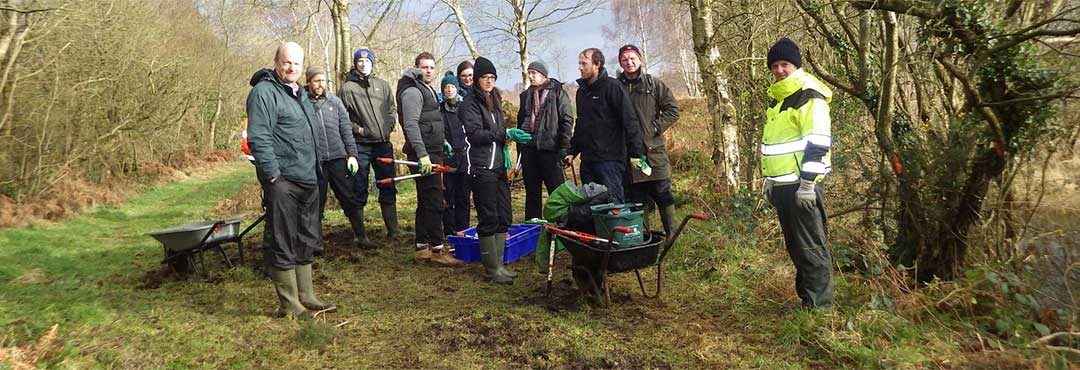
Volunteers in the CVNI nursery use a rounded pole about 1.5 metres long which saves having to bend over the container and the weight of the pole helps with the pulverising. It is easier if the berries are fully ripe or crushing them can be difficult.
After maceration, the entire mass of pulp, skin and berries may be sown, but extraction of the seed makes the whole process more exact. It also releases the seed from the inhibiting effects of the pigments contained within the pulp and skin.
Vigorous washing of the damp mass with hose pressure and stirring causes the pulp and skin to rise to the top, when it can be poured off. The viable seed, being heavier, will sink to the bottom and can easily be separated. Discard seeds that float, which are infertile (this float test is also a good check for viability of hazel nuts and beech mast).
Extraction is particularly beneficial for rowan, but in CVNI’s experience hawthorn and holly also benefit although these are still slow to germinate, needing 2 – 3 seasons.
If seed is sown straight away after collection, it will stratify naturally in the ground. However, some species need a really cold winter to break dormancy, some take two or three years to develop, and in general germination is slower and more variable without proper preparation by stratifying.
When seeds are stratified under controlled conditions few are lost and germination is more even and reliable. Maceration and extraction help some species even more.
There are other problems with sowing straight away -seed may seem to us to be hidden under the ground, but there are plenty of birds and small mammals that can smell it out and make a good meal.
So seed losses may be high, seed will be occupying ground when space is short, and you will have a crop of uneven age young trees. On a small scale this may not matter too much, but if you are producing trees in any quantity it adds to the labour, which is not desirable.
More advice is given after the individual accounts.